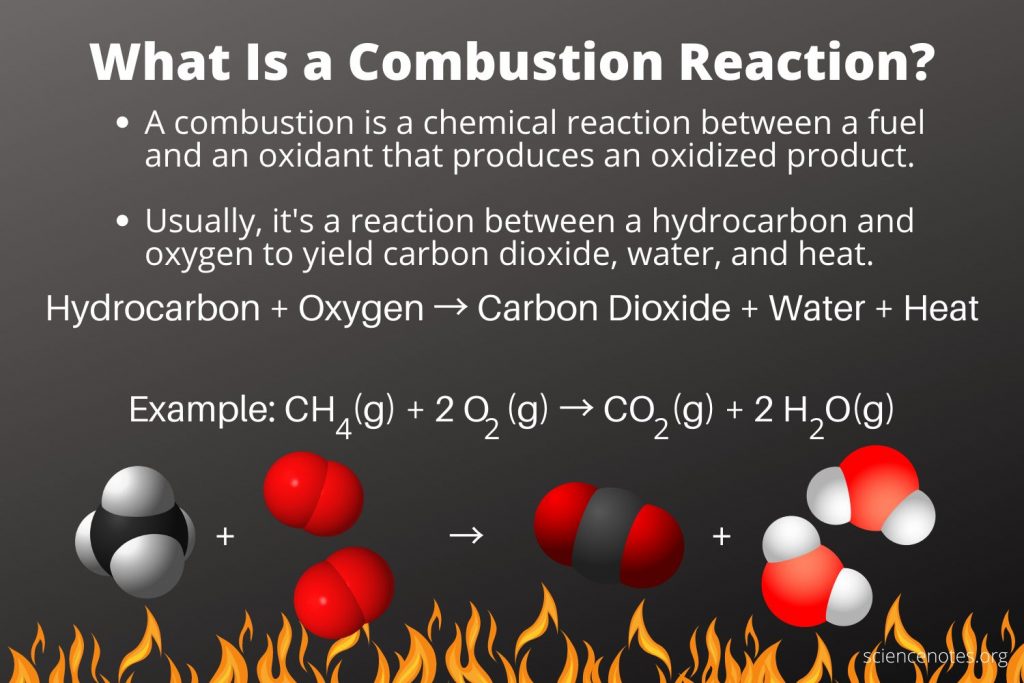
Combustion, a chemical reaction between substances, usually including oxygen and usually accompanied by the generation of heat and light in the form of flame. Combustion refers to the process where a substance burns in the presence of oxygen, giving off heat and light in the process This page provides an overview of combustion reactions, emphasizing their need for oxygen and energy release
It discusses examples like roasting marshmallows and the combustion of hydrocarbons, … In an internal combustion engine (ice), the ignition and combustion of the fuel occurs within the engine itself. Combustion is a reaction between a hydrocarbon fuel (e.g., coal, propane, wood, methane) and molecular oxygen (o 2), producing carbon dioxide (co 2), water (h 2 o), and heat.
Combustion is a chemical process that involves the rapid reaction of a substance with oxygen, releasing heat and light The substance that reacts is called the fuel, and the source of oxygen is called the oxidizer The fuel can be a solid, liquid, or gas, but it is usually a liquid or gas. When fuels burn in combustion reactions, they release useful thermal energy (heat)
Combustion reactions are used to heat our homes, power most cars, and to generate a lot of our electricity. Combustion, also known as burning, is the basic chemical process of releasing energy from a fuel and air mixture